Dental anxiety is one of the leading reasons people avoid dental appointments, ultimately harming their health and well-being. At Bold Dental, we understand the profound impact of dental fear and have designed our care to help every patient experience calm, comfortable, and transformative dental visits through sedation dentistry.Â
In this detailed guide, we will explore what dental anxiety is, how sedation dentistry works, the types of sedation available, and why this approach can be life-changing for those who struggle to step into a dental office.
1. What Is Dental Anxiety?
Dental anxiety is a feeling of apprehension, fear, or stress linked directly to the dental environment. For many, the sights, sounds, and sensations of a dental office—along with previous negative experiences—can trigger mild uneasiness to overwhelming panic. According to NIH, dental anxiety affects patients of all ages and can be caused by:
- Fear of pain or needles
- Negative or traumatic past dental experiences
- Embarrassment due to oral health
- Sensitivity to sounds or smells of dental offices
- Feeling out of control in the dental chair
2. Why Dental Anxiety Matters
Avoiding the dentist due to anxiety can quickly escalate into serious oral health and general health issues. Untreated dental problems can develop into infections or tooth loss or even impact your overall well-being due to the proven link between oral and systemic health. Regular visits are essential for preventative care, early intervention, and long-term mouth health.
3. What Is Sedation Dentistry?
Sedation dentistry refers to techniques and medications designed to help patients relax, reduce anxiety, and even “sleep†through procedures as needed. Far from simply numbing the mouth, sedation dentistry targets the emotional and psychological barriers that keep people from getting the care they deserve.
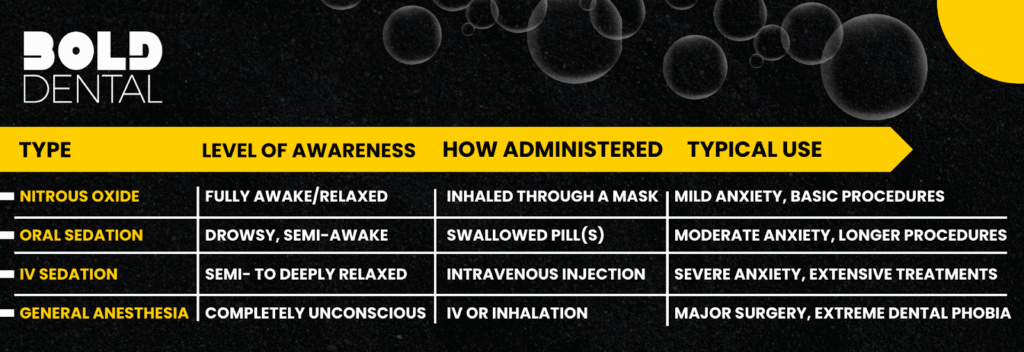
Sedation can be administered in several forms—from mild relaxation (nitrous oxide) to moderate conscious sedation to deep sleep with general anesthesia. Each is tailored to your needs, procedure type, and health background.
4. Types of Sedation Dentistry
Sedation dentistry isn’t one-size-fits-all. Depending on your anxiety level, medical history, and the procedures you need, your dentist may recommend one of the following:
5. Who Can Benefit from Sedation Dentistry?
You may be an ideal candidate for sedation dentistry if you:
- Have high dental anxiety or phobia
- Had previous traumatic dental experiences
- Have a strong gag reflex or difficulty sitting still
- Need extensive or multiple procedures completed in fewer visits
- Have special needs or difficulty getting numb with local anesthesia
Children, adults, and seniors can all benefit, but a careful medical review is essential to select a safe type and dosage.
6. Major Benefits of Sedation Dentistry
1. Profound Anxiety Relief
Sedation can eliminate irrational fears, letting you receive needed care in peace.
2. Painless, Comfortable Treatment
Sedation medications suppress pain responses, and you’re less aware of sounds, tastes, and smells that may have caused distress before.
3. Saves Time—Fewer Appointments
Because you’re fully relaxed, your dentist can often perform several procedures in one longer session instead of multiple stressful visits.
4. Improved Oral Health
Sedation patients are much more likely to keep up with checkups and complete needed dental work, breaking the “cycle of avoidance†and boosting overall health.
5. More Positive Associations
Painless, anxiety-free dental visits create positive new memories and can often help reduce dental fear in the long term.
7. Risks and Safety Measures
Is sedation dentistry safe? When performed by properly trained professionals, sedation dentistry is extremely safe for healthy adults and children. Key safety considerations include:
- Comprehensive medical history review
- Monitoring vital signs during and after the procedure
- Use of modern equipment and emergency protocols
- Clear pre- and post-operative instructions for patients
Minor side effects may include drowsiness, dizziness, or mild nausea, which typically pass within hours. Serious complications are rare, but those with complicated health histories or medication allergies require extra caution.
At Bold Dental, your comfort and safety are our highest priorities at every step.
8. The Bold Dental Approach: Patient-Centered Sedation Options
At Bold Dental in Tulsa, we believe everyone deserves judgment-free, anxiety-free dental care. Our experienced team provides personalized sedation options, including:
- Nitrous oxide (“laughing gasâ€) for gentle relaxation
- Oral conscious sedation for longer or more involved procedures
- Referrals for IV sedation or general anesthesia when needed for medical or procedural reasons
We work with you to choose the most appropriate and safest type of sedation, ensuring you feel calm, informed, and in control throughout your experience.
9. How to Prepare for a Sedation Dental Visit
Before your appointment:
- Follow any instructions about fasting or taking medications
- Arrange a ride home (if not using only nitrous oxide)
- Arrange for recovery time if needed
During your appointment:
- Our team will monitor you at all times
- You can signal us if you need anything, even under sedation
After your appointment:
- Follow any provided aftercare instructions
- Expect to feel drowsy for a few hours if you had oral or IV sedation
10. Overcoming Myths About Sedation Dentistry
- “Sedation is just for people who are afraid of the dentist.â€
- Sedation is ideal for anyone whose dental experience is compromised by anxiety, sensitivity, complex needs, or time constraints.
- “Sedation is risky and unsafe.â€
- When delivered by trained professionals with proper monitoring, dental sedation is extremely safe. The overall risk of serious complications is extremely low, especially compared to the risks of avoiding necessary care.
- “I won’t be able to talk or respond under sedation.â€
- With most forms (except general anesthesia), you remain responsive and can signal your needs or discomfort.
- “It’s just for long, complicated procedures.â€
- Sedation is useful even for cleanings, fillings, or any care that causes fear or discomfort for you.
Frequently Asked Questions
Q: Will I be unconscious during sedation dentistry?
A: Most types allow you to stay awake but relaxed and unafraid. Only general anesthesia produces full unconsciousness.
Q: Is sedation dentistry covered by insurance?
A: Coverage varies by plan and medical necessity. We’ll help you understand your options and provide cost estimates up front.
Q: Can children or elderly patients receive sedation?
A: Yes, with strict safety guidelines and medical screening, both groups can benefit, though certain options may be limited due to health factors.
Q: How soon can I go home after my treatment?
A: Nitrous oxide wears off quickly, allowing you to drive yourself home; oral and IV sedation require a ride and some recovery time.
Take Control of Your Dental Health
If dental anxiety has been keeping you from getting the care you deserve, Bold Dental’s sedation options empower you to transform your dental experience—painlessly, comfortably, and safely. Our compassionate Tulsa team tailors every step to your needs, from the first consultation through your smile transformation. Don’t let fear compromise your health, confidence, or happiness. Schedule your anxiety-free visit with Bold Dental today at (918) 922-2653 and discover a new era of dental care.