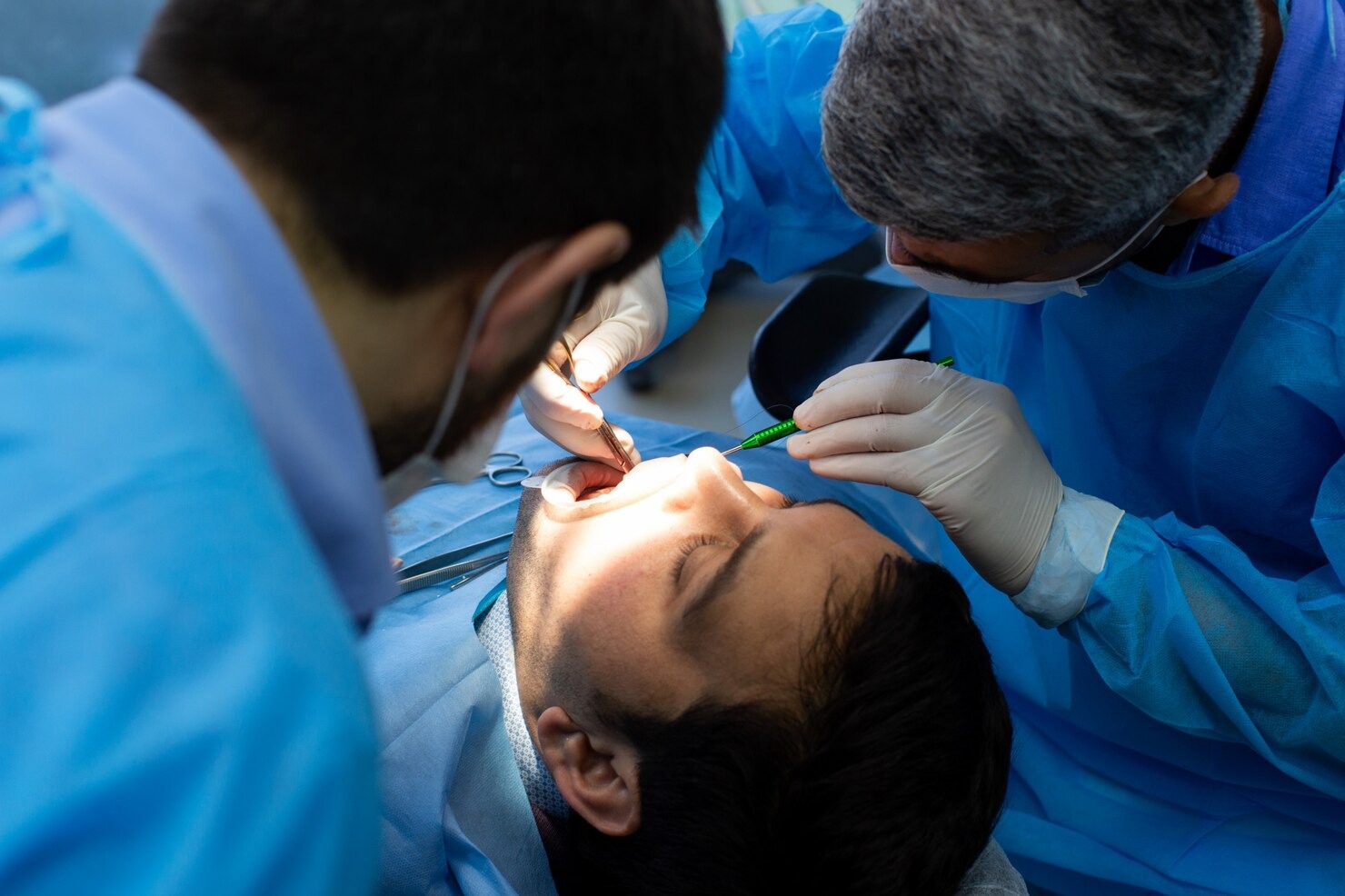
The idea of getting a tooth extracted might make you feel concerned, but it is generally a routine dental procedure that is often quicker and easier than people expect. Whether you’re dealing with a painful wisdom tooth or making room for orthodontic work, extractions are often necessary to protect your overall oral health.
Most extractions are routine, done with care and attention to your comfort. At Bold Dental, our dentists use advanced techniques and modern sedation options to ensure a smooth and nearly painless experience from start to finish.
Reasons for Tooth Extraction
Let’s break down the main reasons your dentist might suggest taking a tooth out:
- Severe decay: When tooth decay reaches the inner pulp and can’t be treated with a root canal, extraction is often the only option.
- Advanced gum disease: Periodontal disease can damage the bone supporting teeth, causing them to loosen.
- Impacted teeth: This is common with wisdom teeth, which may be trapped under the gums or pushing against neighboring teeth.
- Trauma: Teeth that are fractured or broken due to injury may need removal if they can’t be restored.
- Overcrowding: In orthodontic cases, extracting one or more teeth can make room for alignment.
- Preparation for prosthetics or braces: Sometimes, a tooth must be removed to properly fit dentures or create space for a successful orthodontic treatment plan.
Regardless of the reason, your dentist’s primary goal is to protect your oral health and prevent future dental issues.
What Happens Before Extraction
Before the actual procedure, your dentist will conduct a thorough evaluation to create a personalized treatment plan.
- Consultation and X-rays: The dentist examines your mouth and takes X-rays to assess the tooth’s position and surrounding bone structure. This helps determine whether a simple or surgical extraction is needed.
- Medical history review: Your dentist will ask about existing conditions, allergies, and medications, especially if you’re taking blood thinners or have heart issues.
- Anesthesia or sedation options: Depending on the complexity of the extraction and your comfort level, the dentist may use:
- Local anesthesia to numb the area.
- Oral sedation for higher anxiety or surgical extractions.
- Pre-operative instructions: If you’ll be sedated, you may need to avoid food or drink for several hours before the procedure. You might also be advised to pause certain medications temporarily, always under medical supervision.
The goal of this preparation is to reduce risk and make sure everything goes smoothly on the day of the procedure.
The Tooth Extraction Procedure
The two main categories of tooth extraction are simple extractions and surgical extractions.
- Simple extraction: Your dentist starts by numbing the area visible above the gum line so you don’t feel a thing. Then, with the help of an elevator tool, the teeth are loosened before being lifted out with forceps. The whole process is quick, controlled, and designed to keep you comfortable from start to finish.
- Surgical extraction: Needed for impacted or broken teeth. The dentist may make a small incision in your gum and, in some cases, section the tooth into smaller pieces for easier removal.
Here’s how the process typically unfolds:
- Anesthesia is administered to ensure you’re comfortable and don’t feel pain.
- The tooth is gently loosened from its socket using a dental elevator.
- The dentist removes the tooth with forceps. If it’s impacted or stuck, it may be sectioned and removed in parts.
- Gauze is placed over the site to stop bleeding, and sometimes stitches are used.
The entire process is performed with the utmost attention to your comfort and safety.
What to Expect After Extraction
Once the tooth is out, your body gets to work healing.
- Immediate effects: Some pressure and mild discomfort are normal. You might experience swelling, minor bleeding, and a dull ache for a day or two.
- Post-operative care:
- Gauze helps control bleeding—bite down gently and change it as directed.
- Pain relief: Over-the-counter medications like ibuprofen are usually enough. For complex cases, your dentist may prescribe something stronger.
- Ice packs can reduce swelling when applied to the cheek in short intervals.
- Do’s and don’ts:
- Take rest, keep your head elevated, and eat soft foods.
- Skip the smoking and alcohol, and hold off on anything crunchy or tough to chew for the first few days.
- Avoid brushing the surgical area directly for the first 24 hours.
- Dry socket risk: One of the most common complications, dry socket happens when the blood clot protecting the bone gets dislodged. This can lead to intense pain and offset your body’s natural healing rhythm, making recovery take longer than it should. It’s not just uncomfortable; it can set you back if not treated properly. If this happens, contact your dentist promptly.
Healing timeline:
- First 24 hours: Bleeding slows, and a clot forms.
- Days 2–3: Swelling peaks and then begins to subside.
- By 1 week: Most pain should be gone, and the area is well on its way to healing.
Full bone healing can take a few weeks to several months, especially after surgical extractions.
FAQs / Common Patient Concerns
Q1. Will the tooth extraction hurt?
Not during the procedure; local anesthesia blocks the pain completely. You may feel pressure but not pain. Afterward, some soreness is expected, but it’s manageable with medication.
Q2. How long does the tooth extraction surgery take for recovery?
You will go back to your usual routine in a day or two. Most discomfort fades within a week, though full healing may take longer.
Q3. When can I eat normally after a tooth extraction?
It is advisable to intake soft foods for the first few days after your tooth extraction. Gradually reintroduce harder foods as healing progresses.
Q4. What are the warning signs of complications?
Call your dentist if you experience:
- Intense pain after a few days (could be dry socket).
- Persistent bleeding.
- Signs of infection: fever, foul odor, and swelling that worsens after day three.
Q5. Will I need to replace the extracted tooth?
That depends. Wisdom teeth typically aren’t replaced. But if a front or functional tooth is removed, your dentist may recommend:
- Dental implants for a permanent solution.
- Bridges to span the gap.
- Dentures for multiple missing teeth.
How to Prepare for a Smooth Experience
A little planning goes a long way:
- Arrange a ride if you’re being sedated—you won’t be able to drive.
- Stock up on soft foods like yogurt, bananas, mashed potatoes, and smoothies.
- Follow medication instructions exactly, especially for antibiotics or pain relievers.
- Create a calm environment post-procedure—take a day off, minimize stress, and get rest.
Being proactive sets you up for a smoother, faster recovery.
Why Choose BOLD Dental in Tulsa, OK?
At our Tulsa dental clinic, we understand that tooth extractions can feel overwhelming. That’s why we focus on comfort, clarity, and compassion every step of the way.
- Our experienced team has handled thousands of successful extractions.
- We offer comfortable sedation options.
- Need urgent care? We provide emergency and fast scheduling.
- Our friendly Tulsa staff walks you through every phase of treatment, from consultation to full recovery.
Ready to get the relief you need?Ready to take care of that tooth? Give Bold Dental a call or CLICK HERE, and we’ll get you on the schedule—quick, easy, and stress-free. We are here to make the process as smooth and painless as possible.